


For 2026, the IRS raised the annual IRA contribution limit to $7,500, up from $7,000 in 2025. If you haven't reached the limit yet, you may still have time to contribute for this year.
Here's what you need to know about this year's limits, the rules that come with them, and some points to consider as you plan.
The 2026 IRA limits
Savers under 50 can contribute up to $7,500 in 2026, and savers 50 and older can contribute up to $8,600.
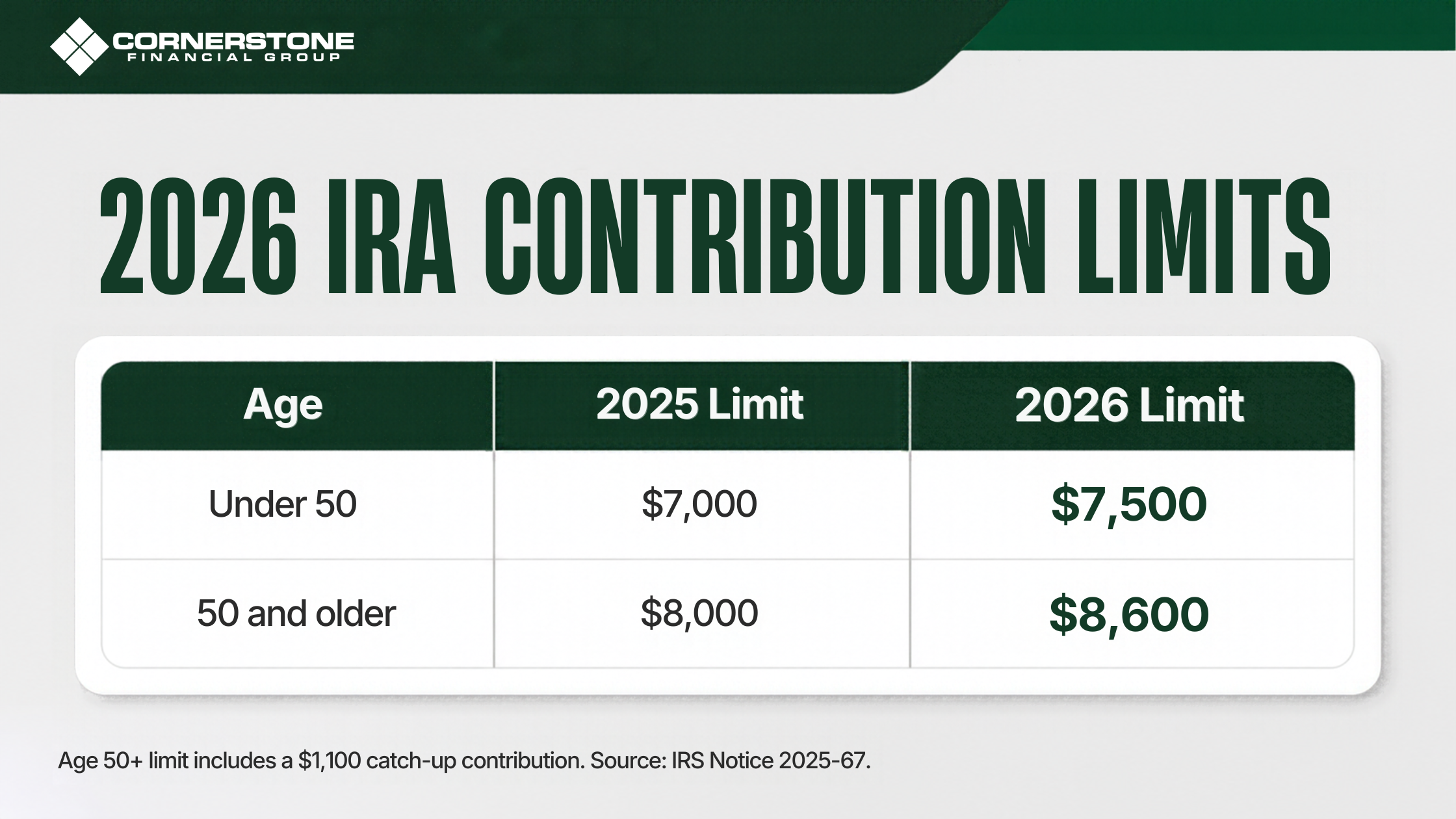
The higher amount for savers 50 and older comes from the catch-up contribution, which rose from $1,000 to $1,100. Thanks to the SECURE 2.0 Act, the IRA catch-up is now adjusted for inflation each year, so it may change from year to year.
Two rules to keep in mind
The limit is shared across all your IRAs. The $7,500 (or $8,600) cap covers your Traditional and Roth IRAs combined. If you put $4,000 in a Roth, you can add up to $3,500 to a Traditional IRA, not another $7,500.
You need earned income to contribute. Your total IRA contributions can't exceed your taxable earned income for the year. If you earned $5,000 from a part-time job, $5,000 is your limit. One exception: a working spouse may be able to contribute to an IRA for a non-working spouse under the spousal IRA rules.
Income limits for Roth and Traditional IRAs
Anyone with earned income can contribute to a Traditional IRA, but your income affects whether you can contribute to a Roth and whether your Traditional contributions are tax-deductible.
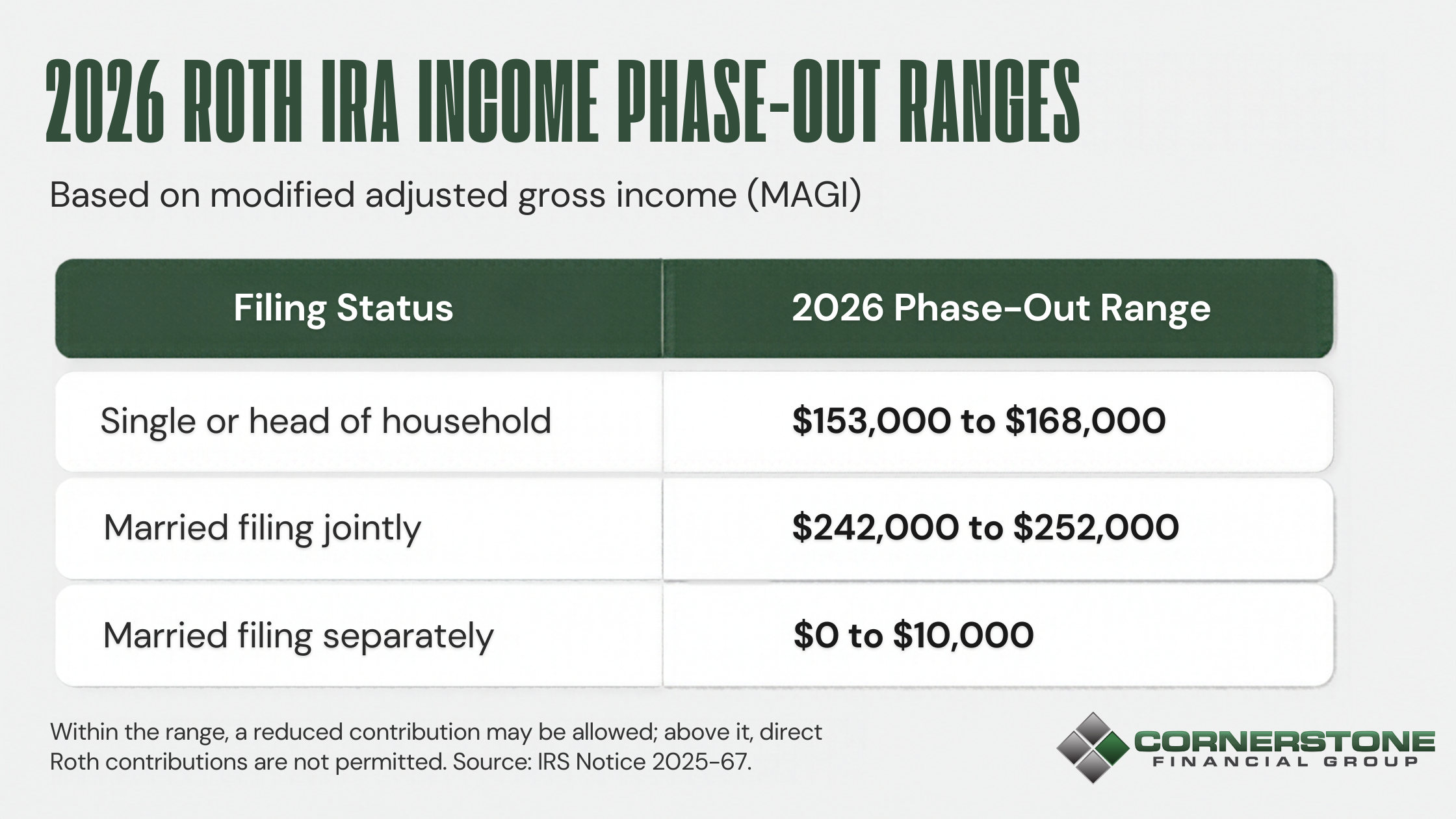
Roth IRA eligibility. Your ability to contribute directly to a Roth IRA phases out based on your modified adjusted gross income (MAGI). Within the range, you can make a reduced contribution; above it, you can't contribute directly.
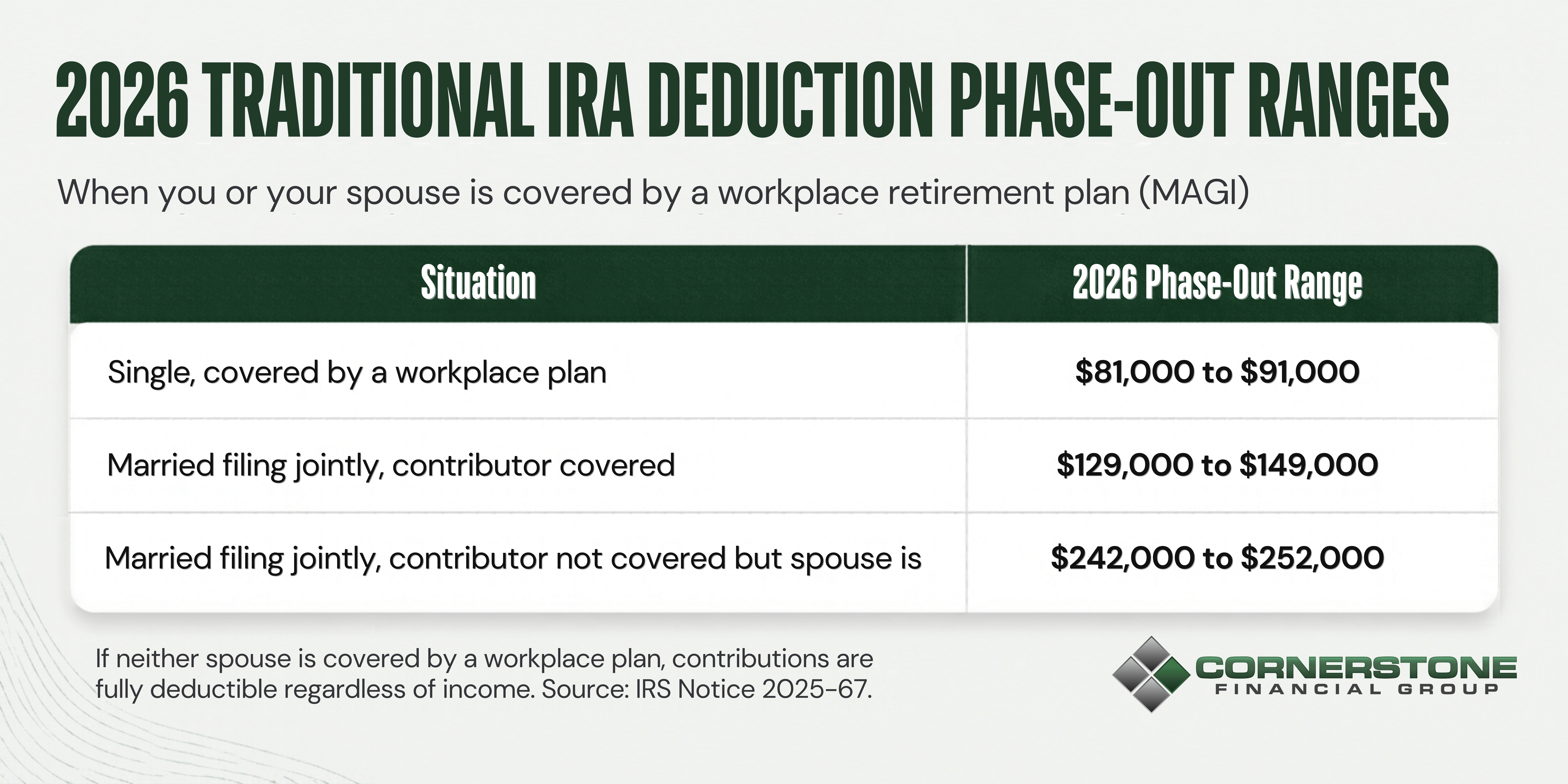
Traditional IRA deductions. If neither you nor your spouse has a retirement plan at work, your Traditional IRA contributions are fully deductible at any income. If one of you is covered by a workplace plan, the deduction phases out at these income levels:
Even if your contribution isn't deductible, any earnings in a Traditional IRA are generally tax-deferred until withdrawn. Some higher earners use non-deductible contributions as part of a "backdoor Roth" strategy. This approach has specific tax rules and may not be appropriate for everyone, so consider discussing it with your tax professional first.
The 2026 contribution deadline
You can make 2026 IRA contributions until the tax filing deadline in April 2027. Filing extensions don't extend this deadline.
Some savers prefer to contribute throughout the year rather than in one deposit at the deadline. For example, $7,500 spread across 12 months works out to $625 a month. Keep in mind that investing involves risk, and the timing of contributions does not guarantee any particular result.
Not sure which IRA is right for you?
Traditional or Roth? Deductible or not? The right choice depends on your income today, where you expect your taxes to be in retirement, and how an IRA fits with the rest of your plan. We're happy to walk through it with you. Call us at (530) 672-1703 or visit www.cfgstrategies.com to set up a time.
Disclosure
This content was generated utilizing the help of AI research and is intended for informational purposes only. Please consult a qualified professional for personalized advice. For specific tax planning or estate planning advice, please consult a qualified tax advisor/CPA or estate planning attorney. This information is educational in nature and should not be considered tax, legal, or financial advice. Individual circumstances vary, and you should consult with qualified professionals regarding your specific situation.
Works Cited
Bramwell, Jason. "IRS Bumps Up 401(k), IRA Contribution Limits for 2026." CPA Practice Advisor, 13 Nov. 2025, www.cpapracticeadvisor.com/2025/11/13/irs-bumps-up-401k-ira-contribution-limits-for-2026/173130/. Accessed 27 Oct. 2026.
"IRS Reveals New 401(k), IRA Contribution Limits for 2026." InvestmentNews, 13 Nov. 2025, www.investmentnews.com/retirement-planning/irs-reveals-new-401k-ira-contribution-limits-for-2026/263029. Accessed 27 Oct. 2026.
"IRS Ups 401(k) and IRA Contribution Limits for 2026." Accounting Today, www.accountingtoday.com/news/irs-ups-limits-for-401k-and-ira-contributions-in-2026. Accessed 27 Oct. 2026.