


📉Market Crashes Over the Last 100 Years: What We've Learned and How to Stay Prepared
The stock market has always experienced cycles of ups and downs. Over the past century, investors have faced several notable downturns that tested resolve and reshaped financial landscapes. While each crash has been unique, history offers valuable insights into how markets have responded—and how individuals might better prepare for future challenges.
The Great Depression (1929–1932): The Longest Road to Recovery
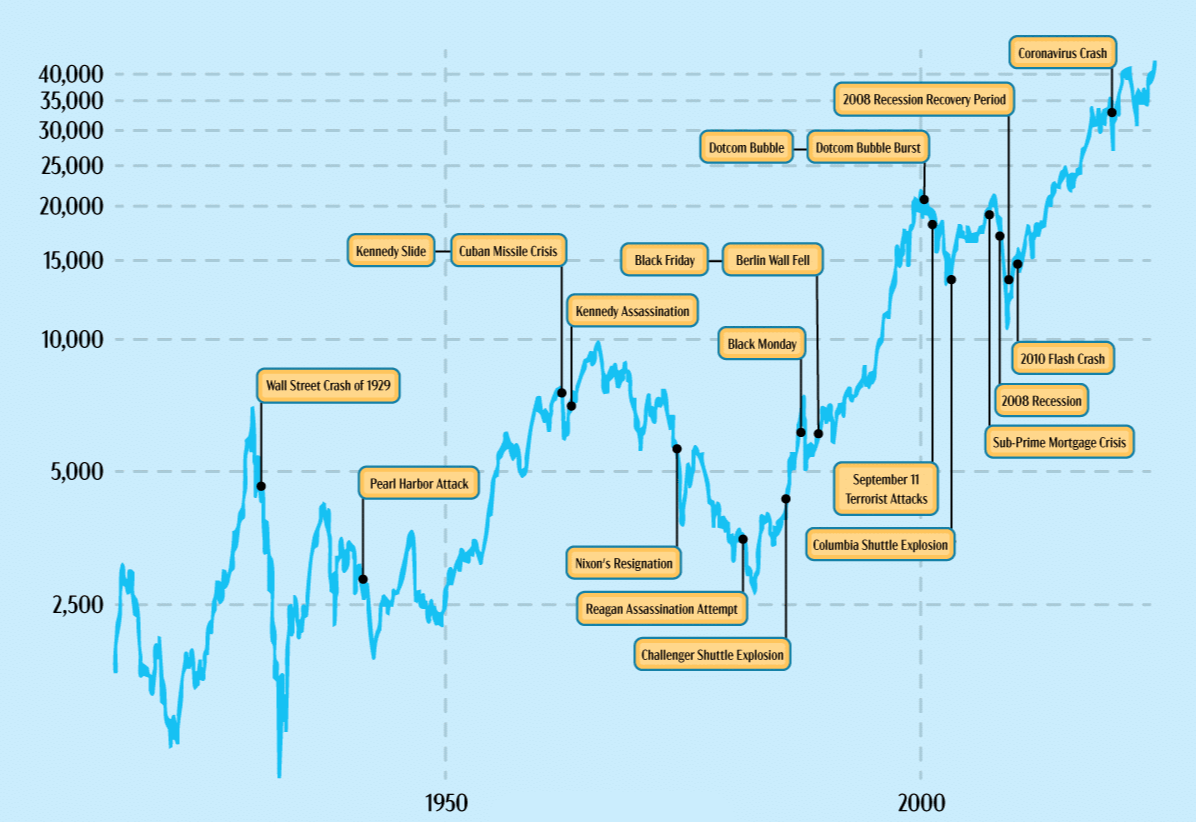
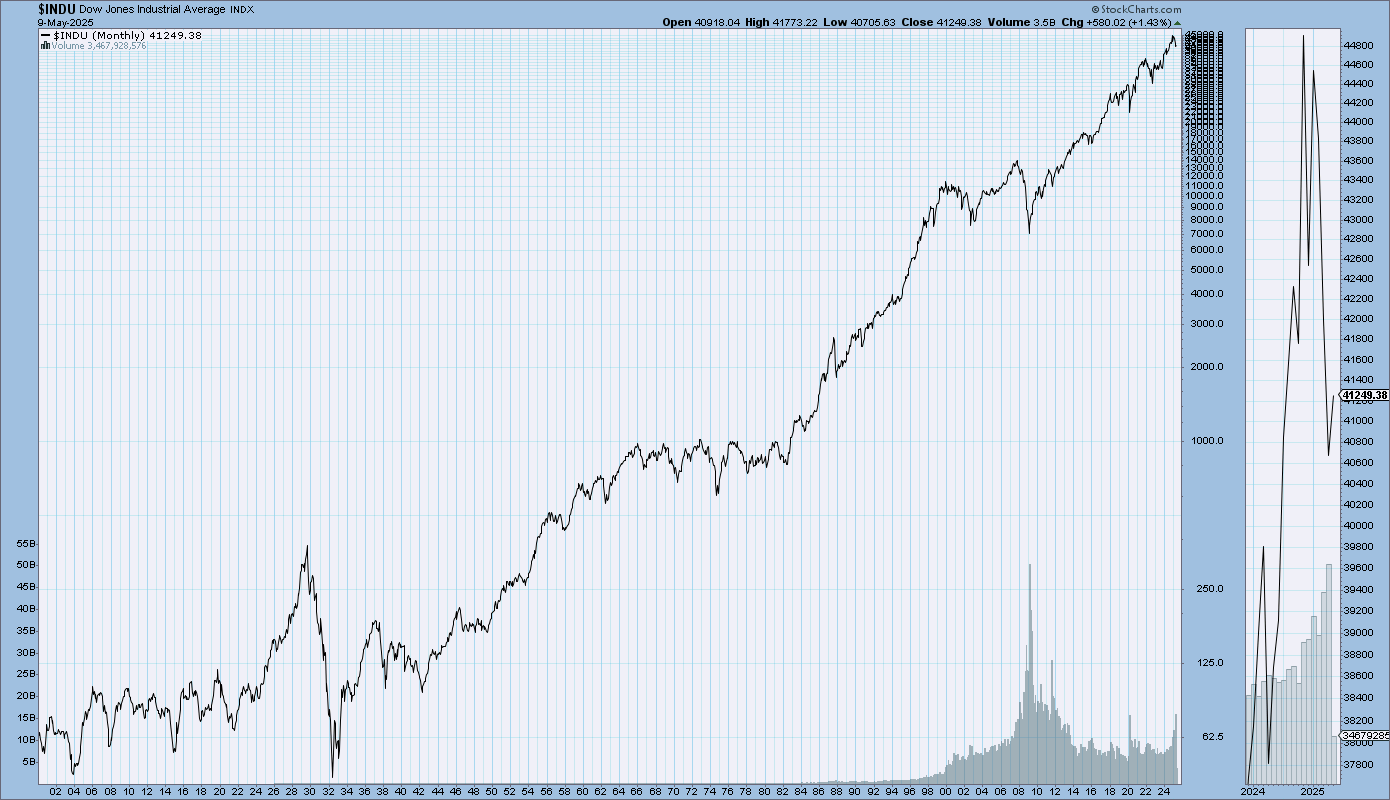
The crash that preceded the Great Depression remains one of the most severe financial collapses in history. Fueled by rampant speculation and extreme leverage, the Dow Jones Industrial Average fell nearly 89% from its 1929 high to its 1932 low.
Key Stats:
- 25 years to return to previous highs
- Unemployment surged to 25%
- Spurred Foundational Financial Reforms
This period brought sweeping legislative changes, including the Securities Act of 1933 and the establishment of the SEC, which continue to shape today's market environment.
Black Monday (1987): The Steepest One-Day Fall
On October 19, 1987, the Dow dropped 22.6% in a single session—the largest one-day percentage decline in U.S. market history.
What Made It Unique:
- No major recession followed
- Recovery occurred within two years
- Exposed the speed and scale of automated trading systems
This event illustrated how technology and global interconnectedness could amplify market volatility and led to safeguards like circuit breakers.
The Dot-Com Bubble (2000–2002): When Innovation Met Reality
Exuberance over internet-based companies led to unsustainable valuations. Many firms with little to no revenue commanded lofty stock prices—until the bubble burst.
The Aftermath:
- NASDAQ declined roughly 78%
- S&P 500 dropped nearly 49%
- It took the NASDAQ about 15 years to revisit previous highs
Investors learned hard lessons about speculation and the importance of focusing on business fundamentals rather than hype.
The Global Financial Crisis (2007–2009): When Housing Crumbled
A downturn rooted in subprime mortgages grew into a global financial meltdown, exposing vulnerabilities in the banking and credit systems.
By the Numbers:
- S&P 500 lost approximately 57%
- Recovery took around 4.5 years
- Prompted historic government action and regulation (e.g., Dodd-Frank Act)
This crisis underscored the importance of risk assessment and diversification.
The COVID-19 Crash (2020): The Fastest Fall—and Recovery
Markets reacted sharply to the pandemic’s uncertainty, with the S&P 500 falling 34% in just over a month. Recovery followed more quickly than in previous crises.
What Set It Apart:
- Recovery occurred in roughly five months
- Fiscal and monetary policy were deployed swiftly
- Investors who avoided panic selling fared better than those who exited early
While rapid, this rebound was shaped by extraordinary interventions and does not suggest future downturns will follow the same trajectory.
Enduring Takeaways for Investors
While no one can predict the future, historical patterns suggest several principles may help investors navigate volatility:
- Markets have historically rebounded—though timelines and magnitudes vary
- Modern policy tools may shorten recovery times, though outcomes are never guaranteed
- Diversification helps manage risk across asset classes and sectors
- Emotional decision-making often leads to unfavorable outcomes
- A thoughtful, long-term strategy offers a framework for responding to uncertainty
Staying Prepared for What’s Ahead
No strategy can eliminate risk, but preparation can help mitigate it. Building financial resilience may include:
- Maintaining an asset allocation aligned with your goals and time horizon
- Keeping adequate cash reserves to reduce pressure during downturns
- Rebalancing periodically to stay aligned with your risk tolerance
- Focusing on investments with solid fundamentals
- Collaborating with a trusted advisor who understands your full financial picture
At Cornerstone Financial Group, we help clients craft personalized strategies aimed at managing uncertainty and pursuing long-term objectives—whatever the market brings.
Want to explore how your portfolio might respond in different market environments? Let’s have a conversation about building financial resilience that aligns with your unique goals.
Sources and Disclosures: This content was generated utilizing the help of AI research and is intended for informational purposes only. Please consult a qualified professional for personalized advice. No strategy can guarantee a profit or prevent against a loss. Indexes are unmanaged and are not available for direct investment. Investing carries an inherent element of risk and it is possible to lose money, including loss of principal. Past performance is not indicative of future results.
- Craig Watkins, Managing Partner
- USA Financial - Weekly Market Insights + Fascinating Financial Facts
- Silver, Caleb. Timeline of Stock Market Crashes. Investopedia
- Bartash, Jeffry. “Stock Market Today: Stocks Soar as CPI Data Signals Inflation Cooling.” Yahoo! Finance
- Graham, Bill. “Dow Jones Futures Surge as NVIDIA Powers Tech Rally; CPI Inflation Data Eyed.” Yahoo! Finance
- FitzGerald, Maggie. “5 Things to Know Before the Stock Market Opens Friday.” Yahoo! Finance
- La Monica, Paul R. “Here’s Why Markets Are Rallying Again Despite Lingering Economic Concerns.” Yahoo! Finance
- Yahoo Finance Staff. “Stock Market Today: S&P 500 Set to Wipe Out 2025 Losses as NVIDIA Powers Tech Rally.”
- “Amid Economic Uncertainty, Some Spend More and Some Spend Less.” Yahoo! Finance
- “Gardening Grows $20B Fortune for Home Depot.” Morning Brew, 8 May 2025; also reported in The Wall Street Journal
- Fortune Staff. “Consumer Confidence Plunges to 86, 13-Year Low.” Fortune
- YCharts. “Weekly Market Recap: May 5–9, 2025.” YCharts
- Ram, Chandra. “Spring Vegetable Paella.” Food & Wine
- Consumer Financial Protection Bureau - "An essential guide to building an emergency fund"
- Insurance Information Institute - "How to create a home inventory"
- FEMA - "Safeguarding critical documents and valuables"
- American Red Cross - "Survival Kit Supplies"
- National Association of Insurance Commissioners - "Disaster Preparedness"